
Mid-Autumn Festival has always been a traditional Chinese holiday. In the past, this season marked the absolute peak for selling premium gifts like tea, alcohol, and cigarettes. However, this year’s Mid-Autumn Festival felt uniquely lonely.
That is the word used by many tea merchants and shop owners today. Many of them openly admit they can no longer survive and are seriously considering closing their shops for good.
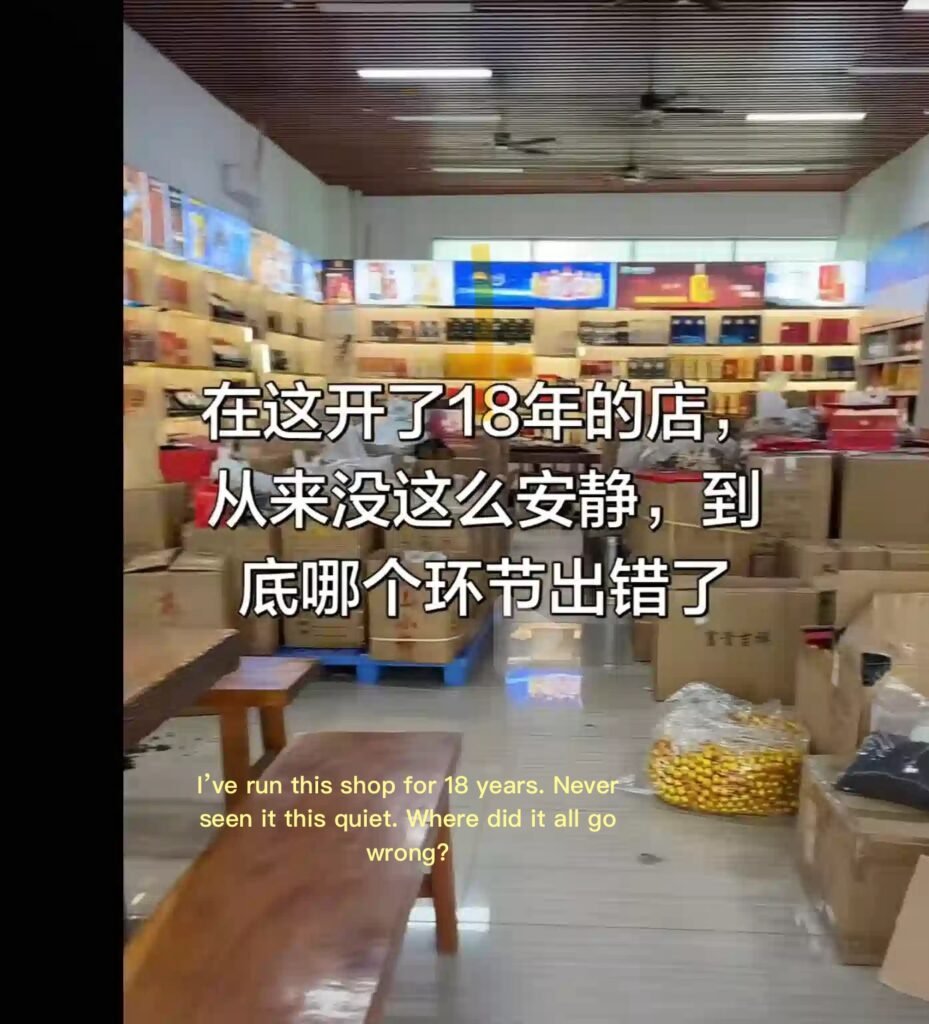
Yet, outside the quiet brick-and-mortar stores, a completely different reality is unfolding. Online tea influencers are thriving. According to recent market data, live-stream tea hosts can easily bring in hundreds of thousands, sometimes even millions of yuan, in a single broadcast.
This sharp polarization reflects a deeply complex side of today’s economy.
Before 2020, there was a decade in China that tea folks still talk about in a particular tone—half nostalgic, half embarrassed. I call it the Golden Times, and I want to be honest about it. Honesty is the only thing worth building a tea brand on.
This was the era when China’s economy was compounding at a pace the world had never seen. A new middle class was discovering “lifestyle” for the first time, and tea—an ancient, humble leaf—got swept into all of it. What follows isn’t a eulogy. It’s a POV: the good, the absurd, and what I think we should actually carry forward.
The Premium Paradox: Kou Liang Cha vs. the ¥30,000 Leaf
Here’s the contradiction that defined the decade: on one end of the shelf, a bag of everyday kou liang cha (口粮茶)—literally “rice-ration tea,” the stuff people drank daily—sold for about ¥30 a jin (500g). On the other end, a jin of green tea with the right pedigree, the right picking date, and the right “Master’s” name attached to it, could sell for ¥30,000. Same leaf category. A thousand-fold gap.
Part of that gap was real: rare terroir, hand-processing skill, genuinely limited harvests. But a lot of it was manufactured scarcity—a title, a story, a name dropped at the right dinner table. The word “大师” (Master) became less a mark of craftsmanship and more a marketing stamp, and everyone in the industry knew it.
The positive turn: This couldn’t last, and it didn’t. The Chinese government eventually stepped in and revoked the official “Master” title designation that had been fueling a lot of this inflation. It was an unglamorous, bureaucratic correction—but it was also the first real signal that the industry itself understood the gap had gotten unhealthy. Quietly, it pushed the market back toward judging tea by what’s actually in the cup.
The Financial Tea Frenzy
If premium pricing was the paradox, “financial tea” (金融茶) was the fever. Certain tea categories—most famously some aged and pressed teas—stopped being bought to drink and started being bought to trade. Cakes changed hands multiple times in a single afternoon. Prices moved like a penny stock, driven by scarcity narratives, closed distribution networks, and a genuine gold-rush psychology. People who had never tasted the tea they were “investing” in were suddenly experts on vintage years and warehouse humidity.
It was, frankly, tea divorced from the act of drinking it. And when any market runs that far ahead of its underlying use case, corrections are inevitable.
The positive turn: The frenzy eventually forced a reckoning that the industry badly needed. Collectors and drinkers started demanding more transparency around provenance, storage, and authentication. Today’s most respected aged-tea sellers are the ones who survived that bubble by actually being able to prove what they sold. The frenzy was reckless, but it accelerated the professionalization of a category that used to run entirely on word-of-mouth and trust.
High-End, Mass-Market: The Xiaoguancha Moment
Then there was a different kind of ambition—not scarcity, but scale. Brands like Xiaoguancha (小罐茶) tried to do to tea what luxury skincare had done to beauty: standardize it, package it beautifully, and sell it to people who had money but no time (or patience) to learn the traditional, slower rituals of tea appreciation. The marketing was aggressive, the pricing controversial, and traditionalists were, understandably, offended by claims about “eight tea masters” hand-picking every leaf.
The positive turn: Love it or hate it, this wave did something traditional tea culture had struggled to do for decades—it made tea approachable again for a huge segment of younger, urban, first-time drinkers who found loose-leaf tradition intimidating. It got tea onto office desks and into gift boxes for people who’d never have walked into a traditional tea house. Many of those consumers eventually did go on to explore “real” single-origin tea. Xiaoguancha turned out to be a gateway, not an endpoint.
When Tea Ceremony Became a Status Prop
Perhaps the most uncomfortable chapter: in the political and business circles of the Golden Times, the tea table became a stage. Gongfu tea sets appeared in offices not because the host loved tea, but because a tea ceremony signaled patience, hierarchy, and cultural sophistication in a meeting. Expensive teas were served—and sometimes barely tasted—as social currency. The ritual that was meant to slow people down and connect them became, in some rooms, just another performance of power.
The positive turn: Even performative appreciation still exposed a huge number of powerful, influential people to real tea culture, some of whom went on to become genuine, serious collectors and patrons of small tea farms. And post-pandemic, as business entertaining shrank and slowed down across the board, a lot of that “status tea” culture quietly faded—leaving space for a simpler, more sincere way of sitting down with a pot of tea.
So What Was the Golden Times, Really?
It was a decade where China’s economic boom lifted tea into places it had never been—into finance, into luxury branding, into political theater—and in doing so, exposed every fault line in how the industry valued its own product. Prices got detached from taste. Titles got detached from skill. Ceremony got detached from meaning.
But every one of those distortions also planted something real: regulatory correction, market transparency, mass accessibility, and cultural exposure. When the pandemic hit and slowed everything down, it didn’t erase the Golden Times—it gave the industry, and drinkers like you and me, the pause we needed to sort out what was actually worth keeping.
That’s the tea story I want to tell honestly. Not the golden myth—the golden, messy, very human truth.
Pingback: A Beginner's Guide to Buying Great Chinese Tea (Safe & Authentic) - MindfulGaiwan